
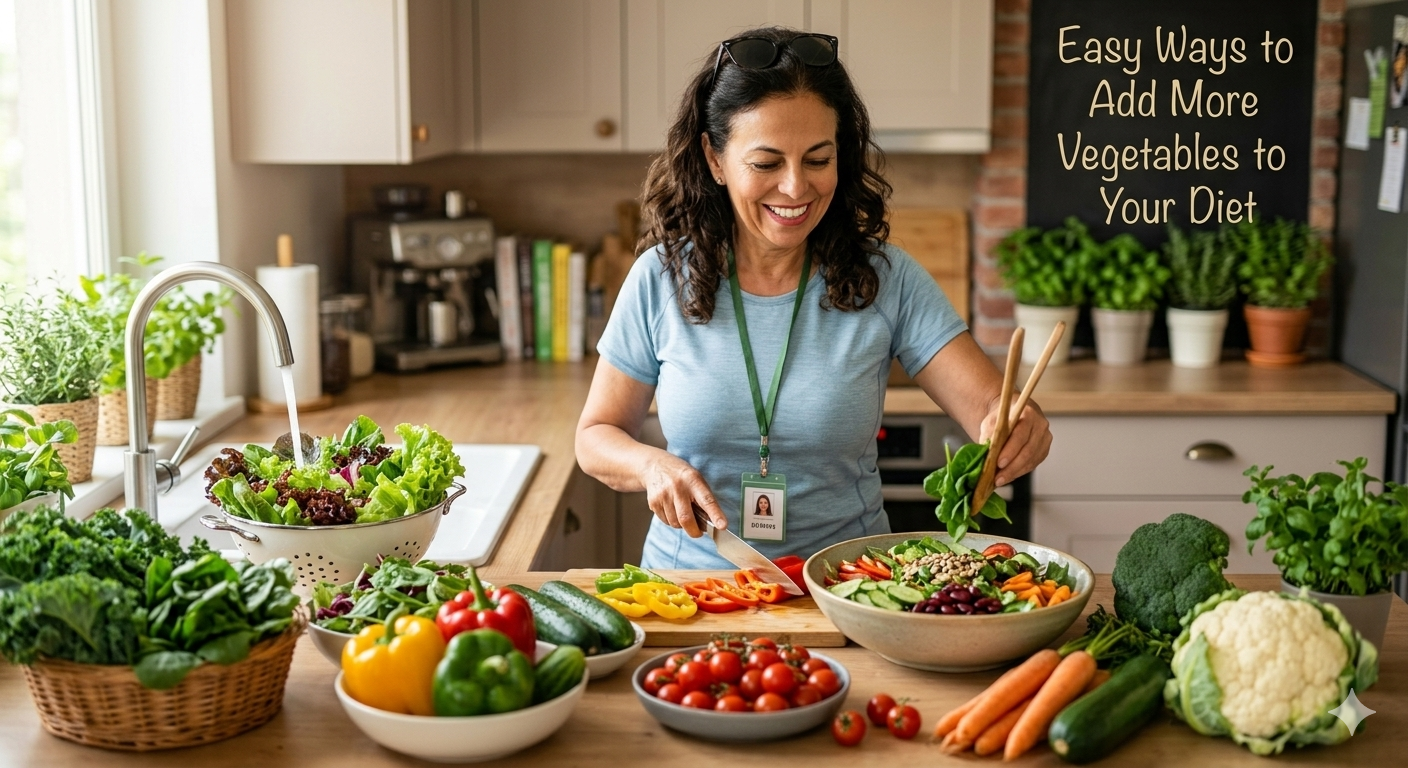
You’ve heard it a thousand times: “Eat more vegetables.” But between busy schedules, picky eaters, and limited ideas, it’s easy to fall short — even with the best intentions. The good news? You don’t need a radical diet overhaul to eat more veggies. With a few simple strategies, you can add vegetables to your meals naturally and enjoyably.
This article will show you how to make vegetables a consistent and delicious part of your diet — without stress or sacrifice.
Why Vegetables Matter So Much
Vegetables are rich in:
- Vitamins and minerals (like A, C, K, potassium, folate)
- Fiber, which supports digestion and gut health
- Antioxidants that fight inflammation and disease
- Water, which supports hydration and detoxification
They’re low in calories, nutrient-dense, and associated with reduced risk of:
- Heart disease
- Diabetes
- Cancer
- Obesity
More plants = more protection.
1. Start with Breakfast
Most people skip veggies in the morning — but it’s a perfect opportunity.
Try:
- Spinach or mushrooms in scrambled eggs
- Zucchini or sweet potato in oats or pancakes
- Avocado on toast with cherry tomatoes
- Veggie-packed smoothies (spinach, cauliflower, beets)
Once you get used to it, morning veggies feel natural.
2. Keep Prepped Veggies Visible and Ready
Make it easy for yourself:
- Wash and chop vegetables right after grocery shopping
- Store them in clear containers at eye level in the fridge
- Keep baby carrots, cherry tomatoes, or snap peas ready for snacks
Accessibility makes healthy choices more likely.
3. Blend Them into Sauces and Soups
This is especially great for picky eaters.
Add finely chopped or blended:
- Carrots, zucchini, or spinach into pasta sauces
- Cauliflower into mashed potatoes or cheese sauce
- Pumpkin or sweet potato into soups or chili
You’ll get the nutrition — without changing the flavor too much.
4. Upgrade Your Sandwiches and Wraps
Give your lunch a veggie boost with:
- Leafy greens instead of iceberg lettuce
- Sliced cucumber, tomato, or bell pepper
- Shredded carrot or red cabbage for crunch
- Roasted veggies in wraps or pita pockets
The more color, the more nutrition.
5. Make Veggies the Main Event (Not the Side)
Instead of meat with a side of vegetables, try:
- Stir-fries with tofu and colorful veggies
- Buddha bowls with roasted vegetables and grains
- Veggie tacos with beans, avocado, and salsa
- Large salads with protein, nuts, and whole grains
Center your meal around plants, and the nutrients multiply.
6. Try Roasting for Maximum Flavor
Roasting brings out natural sweetness and makes veggies crispy, savory, and satisfying.
Tips:
- Use olive oil, salt, pepper, and herbs
- Try combos like carrots + cumin, cauliflower + turmeric, or Brussels sprouts + balsamic
- Roast extra for the next day’s lunch
Roasted vegetables often convert even the skeptics.
7. Dip Them!
If raw vegetables feel boring, add flavor with healthy dips:
- Hummus
- Greek yogurt with herbs
- Guacamole
- Nut-based dressings
Texture + taste = more veggie intake.
8. Add Greens to Everything
Dark leafy greens are nutrition powerhouses — and surprisingly versatile.
Add them to:
- Smoothies
- Pasta dishes
- Stir-fries
- Eggs
- Sandwiches
- Rice or grain bowls
They cook down quickly and blend into almost anything.
9. Try One New Vegetable Per Week
Break the rut by exploring new options:
- Fennel, kohlrabi, beets, bok choy, chard, daikon
- Visit a local market or try a seasonal veggie box
- Look up simple recipes and experiment with preparation
Expanding your veggie vocabulary makes healthy eating more fun.
More Veggies, More Vitality
You don’t have to become a vegetarian to reap the benefits of plants.
By making vegetables more accessible, flavorful, and enjoyable, you create a habit that supports energy, digestion, mood, and longevity.
Start small. Add color. Make it delicious.
Your body will thank you — every single day.